& Gregory Hays’ Translation
Marcus Aurelius’ Meditations, a cornerstone of Stoic philosophy, gains renewed accessibility through Gregory Hays’ acclaimed translation. Hays’ work, often sought as a PDF, offers a modern, readable interpretation of Aurelius’ personal writings, documented during his reign.
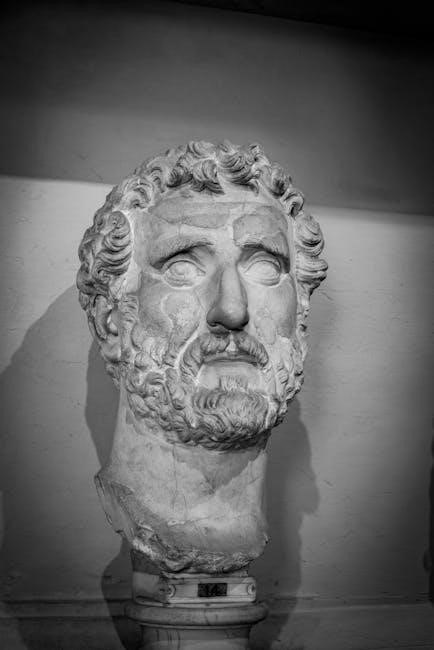
C-SPAN records Gregory Hays discussing his translation in 2002, highlighting its significance. This translation bridges ancient wisdom with contemporary understanding, making Stoicism relevant today.
Why Gregory Hays’ Translation Stands Out
Gregory Hays’ translation of Meditations distinguishes itself through a remarkable balance of scholarly accuracy and contemporary readability, a feat often praised by readers seeking a digestible PDF version. Unlike earlier translations that often felt archaic or overly literal, Hays prioritizes conveying the spirit of Marcus Aurelius’ thoughts in language accessible to the modern reader.
He achieves this not by sacrificing precision, but by carefully considering the nuances of the original Greek and rendering them into natural, flowing English. Hays avoids overly academic phrasing, opting instead for clarity and directness. This approach makes the Meditations less of a historical artifact and more of a living guide to self-improvement.
Many appreciate Hays’ inclusion of helpful notes and an insightful introduction, providing context to Aurelius’ life and the core tenets of Stoic philosophy. His work, frequently available as a digital PDF, has significantly broadened the audience for this timeless text. The 2002 C-SPAN appearance further cemented Hays’ reputation as a translator dedicated to making ancient wisdom accessible.
Ultimately, Hays’ translation doesn’t just present what Marcus Aurelius said, but strives to convey how he thought, fostering a deeper connection between the reader and the emperor-philosopher.

Understanding Marcus Aurelius
Marcus Aurelius, Roman Emperor from 161 to 180 AD, penned Meditations as a personal spiritual journal. Gregory Hays’ PDF translation unlocks insights into his Stoic worldview and leadership.
Life and Reign of Marcus Aurelius
Marcus Aurelius Antoninus (121-180 AD) ascended to become one of Rome’s most respected emperors, ruling during a period marked by both prosperity and significant challenges, including war and plague. His reign demanded constant attention to military campaigns, administrative duties, and the well-being of a vast empire. Yet, amidst these pressures, he dedicated himself to philosophical reflection, meticulously recording his thoughts in the Meditations.
Born into a wealthy and influential family, Aurelius received a comprehensive education, embracing Stoic philosophy early in life. This philosophical grounding profoundly shaped his character and informed his approach to leadership. He wasn’t a warrior by nature, but a thoughtful ruler who prioritized justice, duty, and reason. The Meditations, often accessed today through translations like Gregory Hays’ PDF version, offer a unique window into the mind of a ruler grappling with the complexities of power and the human condition.
His writings weren’t intended for publication; they were private notes, a personal practice of self-improvement. They reveal a man striving for virtue, accepting fate, and finding tranquility in a chaotic world. Hays’ translation makes these intimate reflections accessible to modern readers, preserving the emperor’s voice while enhancing clarity and readability.
Stoic Philosophy: Core Principles
Stoicism, the philosophical school of thought embraced by Marcus Aurelius, centers on the pursuit of virtue as the sole good and the acceptance of what lies beyond our control. Core tenets include distinguishing between what we can influence – our thoughts and actions – and what we cannot, such as external events, the actions of others, and ultimately, fate.
A central practice involves focusing on internal states, cultivating wisdom, justice, courage, and temperance. Emotional turmoil arises not from events themselves, but from our judgments about them. Therefore, Stoics aim for apatheia – freedom from disruptive passions – not a lack of feeling, but a reasoned response to life’s challenges. Gregory Hays’ translation of the Meditations, readily available as a PDF, beautifully illustrates these principles in practice.
The natural order, or logos, is seen as rational and benevolent. Living “in accordance with nature” means understanding our place within this order and accepting our role. This isn’t passive resignation, but active participation guided by reason and virtue. Aurelius’ personal reflections, brought to life by Hays’ work, demonstrate the daily application of these profound ideas.
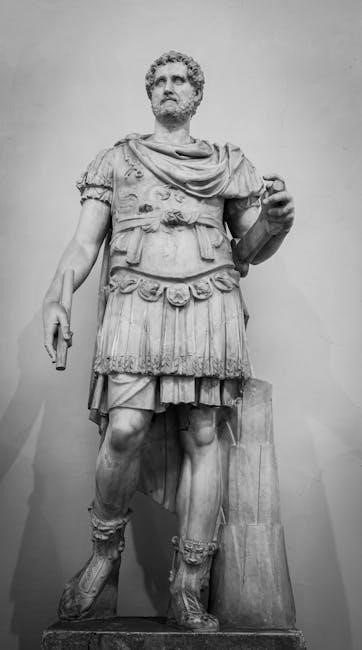
Gregory Hays: The Translator
Gregory Hays, renowned for his accessible translation of Meditations, frequently available as a PDF, is an author featured on C-SPAN. His 2002 speech detailed his approach.

Hays’ Background and Approach to Translation
Gregory Hays brings a unique background to his translation of Meditations, a work often sought in PDF format for its accessibility. He isn’t simply a classicist; his interests extend to performance and adaptation, influencing his translational choices. This is evident in his aim to present Aurelius’ thoughts not as abstract philosophical tenets, but as a living, breathing dialogue – a personal journal meant to be used.
Hays’ approach diverges from purely literal translations. He prioritizes conveying the sense and impact of Aurelius’ writing, even if it requires deviating from a word-for-word rendering. He meticulously researched the historical context and nuances of the Greek language, striving for accuracy while simultaneously ensuring readability for a modern audience. His 2002 C-SPAN appearance showcased his dedication to making Stoicism approachable.
He actively avoids archaic language and convoluted sentence structures, opting for clarity and directness. This doesn’t imply simplification, but rather a skillful re-presentation of complex ideas in a manner that resonates with contemporary readers. The widespread availability of his translation as a PDF speaks to its enduring popularity and influence.
Hays’ Translation Philosophy: Accuracy vs. Readability
Gregory Hays’ translation of Meditations, frequently encountered as a PDF download, navigates the perennial translator’s dilemma: accuracy versus readability. He doesn’t subscribe to the notion that these are mutually exclusive goals, but rather views them as complementary aspects of successful translation. Hays consciously prioritizes conveying the spirit and intent of Aurelius’ writing, even if it necessitates departures from strict literalism.
He argues that a hyper-literal translation, while academically precise, can often obscure the meaning for the average reader, rendering Aurelius’ wisdom inaccessible. His 2002 C-SPAN discussion highlighted this very point. Hays’ philosophy centers on recreating the experience of reading Aurelius, capturing the immediacy and personal tone of the original Greek.
This involves making judicious choices regarding phrasing, sentence structure, and vocabulary, aiming for a natural and flowing English style. While acknowledging the importance of scholarly rigor, Hays believes that a translation’s primary function is to communicate effectively with a modern audience, a goal facilitated by the widespread availability of his work in PDF format.
The Impact of Hays’ Work on Modern Stoicism
Gregory Hays’ translation of Meditations, readily available as a PDF, has profoundly impacted the modern resurgence of Stoicism. Before Hays, Aurelius’ work often felt distant and academic, accessible primarily to scholars. His approachable and fluid translation unlocked the text for a broader audience, sparking renewed interest in Stoic principles.
The accessibility afforded by the PDF format further amplified this effect, allowing individuals worldwide to engage directly with Aurelius’ wisdom. Hays’ work has fueled a growing online community dedicated to Stoic practice, with his translation frequently cited in discussions and analyses. His 2002 appearance on C-SPAN helped introduce his approach to a wider public.
Modern Stoic practitioners often credit Hays with making the philosophy feel relevant and applicable to contemporary life. His translation isn’t merely a rendering of ancient text; it’s a catalyst for personal growth and a guide for navigating the challenges of the modern world, solidifying its place as a cornerstone of the Stoic revival.
Legality and Ethical Considerations of PDF Downloads
The widespread availability of Gregory Hays’ Meditations translation as a PDF raises important questions regarding copyright and ethical consumption. While many free PDF versions circulate online, their legality is often questionable. Copyright laws protect the author and publisher’s rights, and unauthorized distribution constitutes infringement.
Downloading a PDF from unofficial sources deprives Gregory Hays and the publishing house of rightful compensation for their work. Supporting authors financially encourages continued scholarship and high-quality translations. Ethical considerations extend beyond legality; respecting intellectual property is crucial.
Legitimate avenues for accessing the text include purchasing a physical copy or an authorized digital version from reputable retailers. While the convenience of a free PDF is tempting, it’s essential to weigh that against the ethical implications. Remember Gregory Hays’ 2002 C-SPAN appearance highlighted his dedication to bringing this work to light – support that effort legally.
Dealing with Adversity and Suffering
Marcus Aurelius’ Meditations, particularly as rendered in Gregory Hays’ accessible PDF translation, offers profound guidance on navigating life’s inevitable hardships. A central tenet of Stoicism, and thus the book, is recognizing that suffering arises not from events themselves, but from our judgments about them.
Hays’ translation clarifies Aurelius’ emphasis on focusing solely on what we can control – our thoughts and actions – and accepting what lies beyond our influence. This isn’t passive resignation, but a powerful form of mental fortitude. Adversity becomes an opportunity for practicing virtue, like courage and resilience.
The Meditations, readily available as a PDF, encourages viewing challenges as natural parts of the cosmic order. Remembering the transient nature of all things, a theme Hays skillfully conveys, diminishes the sting of loss and pain. Gregory Hays’ work, discussed on C-SPAN in 2002, makes these ancient insights remarkably relevant for modern struggles.
The Importance of Virtue and Reason
Marcus Aurelius’ Meditations, expertly translated by Gregory Hays and often accessed as a convenient PDF, places paramount importance on living a life guided by virtue and reason. For Aurelius, virtue – wisdom, justice, courage, and temperance – isn’t merely a moral ideal, but the sole good, the foundation of a fulfilling existence.
Hays’ translation illuminates how Aurelius believed reason allows us to understand the natural order of the universe and our place within it. By applying reason, we can discern what is truly within our control – our thoughts and actions – and align ourselves with nature’s inherent logic.
The Meditations, as presented in Hays’ accessible PDF version, consistently emphasizes that external factors – wealth, health, reputation – are indifferent. True happiness stems from cultivating inner virtue and exercising rational judgment. Gregory Hays’ 2002 C-SPAN appearance highlighted this core principle, demonstrating its enduring relevance for navigating life’s complexities.
Acceptance of Fate and the Natural Order
Marcus Aurelius’ Meditations, brought to life by Gregory Hays’ insightful translation – frequently found as a readily available PDF – centers on the Stoic principle of accepting fate and aligning oneself with the natural order. Aurelius believed the universe operates according to rational principles, a cosmic reason governing all events.
Hays’ work clarifies that resisting this natural order leads only to suffering. Instead, Aurelius advocates for amor fati – a love of fate – embracing whatever life presents with equanimity. This isn’t passive resignation, but a recognition that our efforts should focus on what is within our control: our responses to external events.
The Meditations, as rendered in Hays’ clear PDF translation, repeatedly urges us to view events not as random occurrences, but as necessary parts of a larger, interconnected whole. Gregory Hays’ 2002 C-SPAN discussion underscored this acceptance as crucial for inner peace, a timeless lesson for modern readers seeking resilience.
Living in Accordance with Nature
Marcus Aurelius’ Meditations, expertly translated by Gregory Hays – often accessed as a convenient PDF – emphasizes living in accordance with nature as the path to a virtuous and fulfilling life. This doesn’t refer to a romanticized wilderness, but to aligning with the rational order of the universe and our own human nature.
Hays’ translation illuminates Aurelius’ belief that humans, as rational beings, thrive when they use reason to understand and accept their place within the cosmos. This involves recognizing our social nature and fulfilling our duties to others, acting with justice, kindness, and wisdom.
The Meditations, as presented in Hays’ accessible PDF version, consistently calls for self-awareness and the cultivation of inner virtue. Gregory Hays’ 2002 appearance on C-SPAN highlighted this concept, explaining how Aurelius sought to live authentically, guided by reason and a deep understanding of natural law. True happiness, Aurelius argues, stems from living virtuously, in harmony with both the external world and our internal selves.
Analyzing Specific Passages (Hays’ Translation)
Gregory Hays’ masterful translation of Meditations, readily available as a PDF, allows for detailed passage analysis. His work clarifies Marcus Aurelius’ profound insights into life and virtue.
Book 2, Section 1: On Externals and Internal Control
Marcus Aurelius, in Meditations Book 2, Section 1, as translated by Gregory Hays (often found as a convenient PDF download), lays a foundational principle of Stoicism: the crucial distinction between what lies within our control and what does not. He begins by acknowledging the impressions that assault our minds – judgments about externals, things like reputation, wealth, health, and even the actions of others.
Aurelius urges us to recognize that these externals are, by their very nature, indifferent. They are not inherently good or bad, but rather, our judgments about them create our suffering or peace. He doesn’t advocate for apathy or disengagement, but rather for a shift in focus. Instead of striving to control the uncontrollable, we should concentrate our efforts on cultivating inner virtue – wisdom, justice, courage, and temperance.
Hays’ translation brilliantly captures the directness and practicality of Aurelius’ advice. He renders the ancient Greek with a clarity that resonates with modern readers, making the core message immediately accessible. This section serves as a powerful reminder that true freedom comes not from manipulating the external world, but from mastering our internal responses to it. It’s a cornerstone for building resilience and finding tranquility amidst life’s inevitable challenges.
Book 4, Section 3: On the Transient Nature of Existence
In Meditations, Book 4, Section 3, Marcus Aurelius, through Gregory Hays’ insightful translation (widely available as a PDF), confronts the relentless flow of time and the impermanence of all things; He employs vivid imagery – the swiftness of a river, the brevity of life compared to eternity – to illustrate the fleeting nature of existence. Everything we perceive is in constant flux, constantly changing and ultimately dissolving.
Aurelius doesn’t present this as a cause for despair, but as a call to perspective. Recognizing the transient nature of things liberates us from attachment and the fear of loss. Why grieve over what is inevitably going to pass away? Why strive for lasting fame or fortune when all is destined to vanish?
Hays’ rendering of this passage is particularly effective in conveying the urgency and immediacy of Aurelius’ reflections. He avoids overly ornate language, opting for a directness that mirrors the emperor’s own internal struggle. This section encourages us to focus on the present moment, to live virtuously now, rather than chasing illusions of permanence. It’s a powerful meditation on mortality and the importance of living a meaningful life.
Book 8, Section 48: On the Importance of Present Moment Awareness
Marcus Aurelius, in Book 8, Section 48 of Meditations, powerfully emphasizes the significance of focusing solely on the present, a concept beautifully articulated in Gregory Hays’ accessible translation (often found as a PDF). He argues that dwelling on the past is unproductive regret, while anxiety about the future is equally futile. Both distract us from the only reality we can truly influence: the now.
Aurelius urges us to dissect each moment into its simplest components, acknowledging that it is all we genuinely possess. He advocates for a mindful approach to experience, fully engaging with our current actions and perceptions without being burdened by what has been or what might be. This isn’t passive acceptance, but active engagement with virtue in the present.
Hays’ translation excels in capturing the practical, almost therapeutic, tone of this passage. He presents Aurelius’ advice not as abstract philosophy, but as a concrete strategy for navigating life’s challenges. By concentrating on the present, we cultivate inner peace and resilience, freeing ourselves from the tyranny of time and expectation.
Comparing Hays’ Translation to Others
Gregory Hays’ Meditations translation, widely available as a PDF, is often contrasted with those by Long/Sedley and Waterfield, regarding readability and accuracy. Each version offers unique insights.
Hays vs. Long/Sedley Translation
Gregory Hays’ translation of Meditations, frequently found as a convenient PDF download, distinguishes itself significantly from the scholarly approach of A.A. Long and David Sedley. Long and Sedley’s version, while meticulously researched and heavily annotated, prioritizes philosophical precision and a deep engagement with the original Greek text. This results in a translation that can feel dense and challenging for the casual reader, often requiring familiarity with Stoic terminology and historical context.
Hays, conversely, aims for clarity and accessibility. He prioritizes conveying the spirit of Marcus Aurelius’ thoughts in modern, natural English. While some philosophical nuance might be sacrificed, the result is a translation that feels remarkably immediate and relatable. Hays’ choices regarding phrasing and sentence structure make the text flow more smoothly, inviting a broader audience to engage with Stoic principles.
The Long/Sedley translation is invaluable for academic study, offering a rigorous and detailed analysis of the text. However, for those seeking a more approachable and personally resonant experience with Meditations, particularly through readily available PDF formats, Hays’ translation often proves more effective. It’s a trade-off between scholarly rigor and reader engagement.
Hays vs. Waterfield Translation
Comparing Gregory Hays’ widely circulated PDF translation of Meditations with Robin Waterfield’s version reveals distinct stylistic choices. Waterfield, like Hays, strives for readability, but adopts a slightly more formal and literary tone. His language, while accessible, retains a certain elegance and echoes the classical origins of the text, potentially appealing to readers who appreciate a more traditional feel.
Hays, however, leans towards a distinctly contemporary voice. He deliberately avoids archaic phrasing, opting for direct and conversational language. This approach makes his translation feel incredibly personal, as if Marcus Aurelius is speaking directly to the reader. Some critics argue this sacrifices some of the original’s gravitas, but it undeniably enhances accessibility.
Waterfield’s translation often provides a more nuanced rendering of complex philosophical concepts, while Hays excels at conveying the emotional core of Aurelius’ reflections. Both translations are valuable, but the choice depends on individual preference. For a quick, impactful read – often sought in PDF form – Hays is favored. Waterfield offers a more considered, aesthetically pleasing experience.
Strengths and Weaknesses of Each Translation
Gregory Hays’ Meditations translation, frequently found as a readily available PDF, shines in its clarity and modern voice. Its strength lies in immediate accessibility; the language feels relatable, making Stoic principles easily digestible for contemporary readers. However, this simplicity can be a weakness, potentially flattening the nuances of Aurelius’ original prose and losing some of its philosophical depth.
Conversely, translations like Long/Sedley and Waterfield prioritize scholarly accuracy and stylistic fidelity. While admirable, this often results in denser, more challenging reads. Waterfield, for example, maintains a more literary tone, which some find elegant but others perceive as distancing. Long/Sedley, known for its extensive notes, is invaluable for academic study but less approachable for casual readers.
The “best” translation is subjective. Hays excels at emotional resonance and practical application, making it ideal for those seeking guidance. Other versions offer richer contextual understanding. The widespread availability of Hays’ PDF contributes to its popularity, but readers should consider exploring multiple translations to gain a comprehensive appreciation of Aurelius’ masterpiece.
Applying Stoic Principles to Daily Life
Marcus Aurelius’ Meditations, particularly through Gregory Hays’ accessible translation – often accessed as a convenient PDF – isn’t merely historical philosophy; it’s a practical guide for modern living. A core tenet is focusing on what we can control: our thoughts and actions. External events, like traffic or others’ opinions, are “indifferents,” not worth emotional turmoil.
Hays’ clear prose facilitates applying this principle. When facing adversity, remember Aurelius’ emphasis on virtue and reason. Instead of reacting with anger or frustration, practice self-awareness and choose a rational response. Acceptance of fate isn’t passive resignation, but recognizing the natural order and focusing energy on internal improvement.
Daily practice involves mindful reflection, similar to Aurelius’ journaling. Regularly examine your judgments, challenge negative thoughts, and cultivate gratitude. Living in accordance with nature means aligning your actions with reason and contributing to the common good. The PDF format allows for easy access to these timeless lessons, fostering a more resilient and fulfilling life.
Resources for Further Study
Gregory Hays’ translation of Meditations, readily available as a PDF, is a starting point. Explore online Stoic communities and books by modern scholars for deeper understanding.
C-SPAN’s interview with Hays provides valuable insight into his approach and the enduring relevance of Aurelius’ wisdom.
Online Resources for Stoic Philosophy
The Daily Stoic (https://dailystoic.com/) offers daily emails and articles drawing heavily from Marcus Aurelius’ Meditations, often referencing Gregory Hays’ translation. It’s an excellent entry point for integrating Stoic principles into daily life, and many articles directly analyze passages from the text, sometimes referencing readily available PDF versions for study.
Modern Stoicism (https://modernstoicism.com/) provides a wealth of resources, including articles, courses, and a directory of Stoic practitioners. They frequently discuss the nuances of different translations, including a comparative analysis of Hays’ work, and offer guidance on finding reliable PDF copies for personal study. The site also hosts recordings of lectures and workshops exploring Stoic thought.
The Stanford Encyclopedia of Philosophy (https://plato.stanford.edu/entries/stoicism/) offers a comprehensive, scholarly overview of Stoic philosophy, providing historical context for Marcus Aurelius and his Meditations. While not focused solely on Hays’ translation, it’s invaluable for understanding the philosophical underpinnings of the text. Searching for “Marcus Aurelius” within the site will yield relevant articles. Remember to verify the source of any PDF downloads to ensure legality and ethical compliance.
Furthermore, numerous YouTube channels dedicated to philosophy and self-improvement frequently discuss Meditations and Gregory Hays’ translation, offering accessible explanations and interpretations. Be mindful of copyright when accessing materials online, especially PDF versions.
Books on Stoicism and Marcus Aurelius
Beyond Marcus Aurelius’ Meditations, translated by Gregory Hays (a frequently sought-after PDF), several books illuminate Stoic philosophy. Pierre Hadot’s The Inner Citadel explores the spiritual exercises central to Stoicism, providing context for understanding Aurelius’ personal reflections. Donald Robertson’s How to Think Like a Roman Emperor directly applies Stoic principles, particularly those found in Meditations, to modern challenges.
William B. Irvine’s A Guide to the Good Life: The Ancient Art of Stoic Joy offers a practical introduction to Stoicism, drawing heavily from Epictetus and Marcus Aurelius. Massimo Pigliucci’s How to Be a Stoic: Using Ancient Philosophy to Live a Modern Life provides a contemporary framework for incorporating Stoic virtues into daily routines, often referencing Hays’ accessible translation of Meditations.
provides a concise overview of the school of thought. When seeking digital copies, including a PDF of Meditations, prioritize legal and ethical sources to support authors and publishers. Always verify the legitimacy of online downloads.
Finally, exploring commentaries on Meditations, such as those by Robin Waterfield, can enhance understanding of Aurelius’ complex ideas and the nuances captured in Hays’ translation.
Gregory Hays’ Other Works and Interviews
While renowned for his masterful translation of Marcus Aurelius’ Meditations – often available as a PDF – Gregory Hays boasts a diverse body of work. He is also a skilled classicist and translator of other ancient texts, demonstrating a commitment to bringing classical literature to modern audiences. His expertise extends beyond Stoicism, encompassing broader aspects of ancient Greek and Roman culture.
Notably, Hays has engaged in public discussions about his translation process and the enduring relevance of Stoic philosophy. C-SPAN documented a 2002 speech where he discussed his approach to translating Meditations, emphasizing clarity and accessibility. Finding transcripts or recordings of these interviews can offer valuable insights into his interpretive choices and the challenges of rendering ancient wisdom for contemporary readers.
Further research reveals Hays’ dedication to accurate and engaging translations. He prioritizes conveying the original meaning while ensuring readability, a key factor in the widespread popularity of his Meditations translation, even in PDF format. Exploring his academic background and other published works provides a fuller appreciation of his contributions to classical scholarship.
Unfortunately, a comprehensive list of all his interviews is difficult to compile, but searching academic databases and online archives may yield additional resources.