The BOSS ME-50 is a versatile multi-effects processor, offering a wide range of sounds for guitarists seeking tonal flexibility and creative expression․
Access official owners manuals and support resources directly from the BOSS website, ensuring a smooth learning experience with your new gear․
Stay connected with BOSS through their Facebook page, YouTube channel, and global social network for updates and inspiration․
What is the BOSS ME-50?
The BOSS ME-50 is a compact, yet powerful, multi-effects processor designed for guitarists of all levels․ It’s essentially a complete amp and effects setup packed into a single, stompbox-sized unit․ This allows musicians to achieve a diverse palette of tones, from pristine clean sounds to heavily distorted leads, and everything in between․
As highlighted on the BOSS support page, the ME-50 provides access to a vast library of amp models and effects․ It’s more than just a collection of sounds; it’s a tool for crafting unique and personalized tones․ Resources like the official owners manuals, available on the BOSS website, are crucial for understanding its full potential․
The ME-50 aims to simplify the process of tone creation, offering intuitive controls and a user-friendly interface․ It’s a versatile solution for practice, recording, and live performance;
Key Features and Benefits
The BOSS ME-50 boasts an impressive array of features, including a wide selection of amp models, essential effects like modulation, delay, and reverb, and versatile connectivity options․ Accessing the owners manuals on the BOSS website unlocks these capabilities․
Key benefits include its compact size, making it ideal for travel and small spaces․ The intuitive interface simplifies sound creation, while the built-in expression pedal allows for real-time control over effects parameters․ BOSS’s online resources, including their YouTube channel, demonstrate these features․
Furthermore, the ME-50 offers USB connectivity for recording and firmware updates, ensuring it remains a relevant and powerful tool for years to come․ Explore articles on the BOSS website for in-depth knowledge․
Target Audience: Who is this manual for?
This BOSS ME-50 instruction manual is designed for guitarists of all skill levels, from beginners exploring effects for the first time to experienced players seeking a versatile and portable multi-effects unit․ Whether you’re a hobbyist, gigging musician, or recording artist, this guide will help you maximize your ME-50’s potential․
It’s also beneficial for anyone interested in learning about amp modeling and effects processing; BOSS’s support resources, including their official website and online communities, complement this manual․
The manual assumes basic familiarity with guitar terminology, but strives to be accessible and clear for all users․ Stay updated with BOSS via Facebook and other social media․
Getting Started with Your ME-50
Unbox your ME-50, connect the power adapter, and prepare to explore its vast sonic palette․ Refer to the BOSS support website for guidance!
Initial setup is straightforward, allowing you to quickly begin crafting your signature guitar tones and effects chains․
Unboxing and Initial Setup
Carefully unpack your BOSS ME-50, ensuring all included items are present: the unit itself, a power adapter, and potentially a product registration card․ Inspect the unit for any physical damage that may have occurred during shipping․ Before connecting power, verify your power supply matches the ME-50’s voltage requirements to prevent damage․
Connect the included power adapter to the DC IN jack on the rear panel and plug it into a suitable power outlet․ Next, connect your guitar to the INPUT jack and your amplifier or recording interface to the OUTPUT jacks․ BOSS provides detailed visual guides on their support website (https://www․boss․info/global/support/by_product/me-50/owners_manuals/) to assist with these connections․
Finally, power on the ME-50 and prepare to begin exploring its features!
Powering On and Basic Operations
To power on the BOSS ME-50, simply press the [POWER] button located on the top panel․ The unit will boot up, displaying the main screen․ Use the [BANK] buttons (▲/▼) to navigate through different patch banks, and the [PATCH] buttons (◄/►) to select individual patches․
Adjust the overall volume using the [VOLUME] knob․ The expression pedal can be assigned to various parameters for real-time control, offering dynamic performance capabilities․ Refer to the BOSS support page (https://www․boss․info/global/support/by_product/me-50/owners_manuals/) for detailed explanations of pedal assignment options․
Experiment with different patches to familiarize yourself with the ME-50’s sonic palette․
Understanding the ME-50 Interface
The BOSS ME-50 features a user-friendly interface centered around a large LCD screen and intuitive control knobs․ The screen displays patch names, effect parameters, and editing options․ Utilize the [CATEGORY] buttons to quickly access different effect types – modulation, delay, reverb, and more․
The [WRITE] button initiates patch editing, while the [SYSTEM] button accesses global settings․ Explore the BOSS support resources (https://www․boss․info/global/support/by_product/me-50/owners_manuals/) for a comprehensive guide to navigating the interface․
Mastering the interface unlocks the full potential of the ME-50’s sound engine․
Exploring the Sound Engine
The ME-50 boasts a powerful sound engine with diverse amp models and effects, allowing guitarists to sculpt a wide spectrum of tones․
Discover articles on BOSS pedals and amps at https://articles․boss․info/ for deeper tonal insights․
Amp Models: A Comprehensive Overview
The BOSS ME-50 features a robust collection of amp models, meticulously crafted to emulate iconic amplifiers spanning various genres․ From pristine clean tones reminiscent of classic Fender amps to high-gain aggression inspired by Mesa/Boogie and Marshall stacks, the ME-50 delivers a versatile palette for any guitarist․
Explore models covering blues, rock, metal, and more, each offering unique characteristics and tonal nuances․ These aren’t simply digital copies; BOSS utilizes sophisticated modeling technology to capture the dynamic response and feel of the original amplifiers․
Further refine your sound by adjusting parameters like gain, EQ, and cabinet simulation, tailoring each amp model to your specific needs․ Resources at https://articles․boss․info/amps can help you understand amp integration․
Effects Categories: Modulation, Delay, Reverb & More
The BOSS ME-50 boasts an extensive library of effects, categorized for intuitive navigation․ Modulation effects, including chorus, flanger, and tremolo, add depth and movement to your sound․ Delays range from subtle slapback echoes to expansive, ambient textures․ Reverb options simulate various spaces, from intimate rooms to vast concert halls․
Beyond these staples, discover dynamic effects like compressors and limiters, plus specialized processors like wah and phaser․ Explore articles on BOSS pedals at https://articles․boss․info/pedals for inspiration․
Each effect offers adjustable parameters, allowing for precise control and sonic sculpting․
Sound Editing: Parameters and Control
The BOSS ME-50 provides comprehensive sound editing capabilities․ Each effect features multiple parameters, accessible via dedicated knobs and the LCD screen․ These parameters control aspects like depth, rate, feedback, and tone, allowing for detailed sonic shaping․
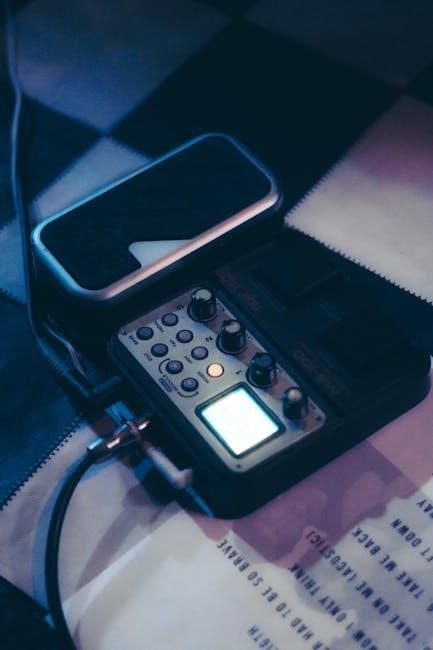
Utilize the ME-50’s intuitive interface to adjust these settings in real-time․ Learn from experts about BOSS amps and effects integration at https://articles․boss․info/amps․ Experiment with parameter combinations to create unique and personalized sounds․
Precise control unlocks the full potential of each effect model․

Patch Creation and Management
The BOSS ME-50 allows users to craft custom tones by creating, editing, saving, and loading patches – personalized collections of amp and effect settings․
Explore the possibilities and build a library of sounds tailored to your individual playing style and musical preferences․
Creating New Patches
To begin crafting a new sound on your BOSS ME-50, first navigate to an empty patch location using the patch select buttons․ Press the “Write” button to enter patch edit mode, initiating the creation process․
You’ll then be able to sculpt your desired tone by selecting and adjusting amp models and effects․ Experiment with different combinations of modulation, delay, reverb, and more, tweaking parameters to achieve your sonic vision․
Remember to utilize the ME-50’s intuitive interface to fine-tune each element, ensuring a personalized and inspiring sound․ Save frequently during the creation process!
Editing Existing Patches
Modifying pre-set or user-created patches on the BOSS ME-50 is straightforward․ Select the patch you wish to alter using the patch select buttons․ Press the “Write” button to enter edit mode, allowing for parameter adjustments․
Utilize the ME-50’s knobs and switches to manipulate amp settings, effect levels, and other crucial parameters․ Experiment with subtle changes or drastic transformations to tailor the sound to your preferences․
Remember to save your edits by pressing “Write” again, overwriting the original patch or saving it as a new one․
Saving and Loading Patches
Preserving your customized tones on the BOSS ME-50 is essential․ After editing a patch, press the “Write” button․ The unit will prompt you to confirm overwriting the existing patch or saving it to a free memory location․
To load a patch, simply use the patch select buttons to navigate through the available sounds․ The ME-50 stores a substantial number of patches, allowing for diverse tonal options․
Regularly backing up your patches via USB (covered elsewhere in this manual) is recommended to prevent data loss․
Connectivity and External Control
The BOSS ME-50 offers versatile connectivity, including standard input/output jacks, a USB port for computer integration, and support for external expression pedals․
Expand your control and creative possibilities by connecting external devices to tailor the ME-50 to your performance needs․
Input/Output Connections Explained
The BOSS ME-50 features a standard ¼ inch input jack for connecting your guitar, and dual ¼ inch output jacks for connecting to an amplifier or recording interface․
These outputs allow for stereo operation, enhancing the spaciousness of effects like reverb and chorus․ A dedicated headphone output provides silent practice, while the AUX IN jack enables you to play along with external audio sources․
The USB port facilitates connection to a computer for recording, editing patches with the BOSS Tone Studio software, and firmware updates․ Proper cable connections are crucial for optimal signal flow and noise reduction․
Always ensure cables are securely plugged in to avoid interruptions during performance or recording sessions․
Using Expression Pedals
The BOSS ME-50 supports expression pedal control, adding a dynamic layer to your performances․ Connect a compatible expression pedal to the dedicated EXP2 jack for real-time control over various parameters․
Assignable parameters include volume, wah, modulation depth, delay time, and more, allowing for expressive sweeps and nuanced changes․ The pedal can be configured globally or assigned to specific patches․
Experiment with different parameter assignments to discover unique sonic textures and performance possibilities․ Proper pedal calibration ensures accurate and responsive control․ Explore the ME-50’s manual for detailed instructions on expression pedal setup․
Connecting to a Computer via USB
The BOSS ME-50 connects to a computer via USB for patch backup, firmware updates, and potentially audio/MIDI interfacing․ Use a standard USB cable to connect the ME-50 to your computer’s USB port․
Download and install the latest BOSS software drivers from the official BOSS website to ensure proper communication․ This software allows you to manage patches, edit parameters visually, and update the ME-50’s system software;
The USB connection also enables audio recording and playback, turning the ME-50 into a convenient audio interface for your computer-based music production setup․

Advanced Features and Techniques
Unlock the ME-50’s full potential with the built-in LOOPER, experiment with dual amp setups for layered sounds, and refine your tone using the noise suppressor․
Using the LOOPER Function
The ME-50’s looper is a powerful tool for practice, improvisation, and performance․ Access it directly from the panel, allowing you to record and playback phrases for creating layered soundscapes․ Begin by selecting a desired tempo and time signature, then press the record button to capture your initial loop․
Overdub additional parts by pressing record again, building up complex arrangements․ Utilize the stop button to halt playback, and experiment with the undo/redo functions for correcting mistakes․ The looper offers various playback modes, including once and continuous, providing flexibility for different musical scenarios․ Explore the manual for detailed instructions on advanced looper features and settings․
Setting Up Dual Amps
The BOSS ME-50 allows for sophisticated dual amp setups, expanding your tonal possibilities․ Connect two amplifiers to the ME-50’s stereo outputs to create a wider, more immersive soundstage․ Within the ME-50’s patch settings, you can assign different amp models to each output, blending their characteristics for unique textures․
Adjust the level and pan of each amp individually to sculpt the stereo image․ Experiment with different combinations of amp models and effects to discover powerful and inspiring tones․ Refer to the manual for detailed instructions on routing signals and optimizing your dual amp configuration for live performance or recording․
Utilizing the Noise Suppressor
The BOSS ME-50 incorporates a built-in noise suppressor to eliminate unwanted hum, hiss, and background noise․ Access the noise suppressor effect within the ME-50’s effects chain and adjust the threshold and reduction parameters to effectively tame noise without compromising your signal’s dynamics․
Carefully setting the threshold is crucial; too low, and it won’t eliminate noise, too high, and it will cut into your sustain․ Experiment to find the sweet spot for your specific gear and playing style․ This feature is particularly useful for high-gain settings or when using noisy pedals․
Troubleshooting Common Issues
Addressing problems with your BOSS ME-50 is often straightforward․ Check connections, power, and patch settings first, consulting the official BOSS support resources․
Explore the BOSS website for solutions to USB connectivity issues, patch memory errors, and complete no sound troubleshooting guides․
No Sound Troubleshooting
Encountering silence with your BOSS ME-50 can be frustrating, but systematic troubleshooting usually reveals the cause․ First, verify all cable connections – guitar to ME-50, and ME-50 to amplifier or interface․ Ensure the volume knob on the ME-50 is turned up, and that the selected patch isn’t muted․
Check your amplifier’s input selection and volume level․ Confirm the ME-50’s output mode is correctly configured for your connection type (e․g․, Line/Headphone for direct recording, Amp for amplifier connection)․ If using headphones, verify they are properly plugged in․ Consult the BOSS support website for detailed diagrams and further assistance with common no sound scenarios․
Finally, try a different cable to rule out a faulty connection․
USB Connectivity Problems
Experiencing issues connecting your BOSS ME-50 to a computer via USB? Begin by ensuring you’re using a USB 2․0 cable – USB 3․0 may cause compatibility issues․ Verify the ME-50 is powered on and set to USB audio mode, if required for your application․
Check your computer’s device manager to confirm the ME-50 is recognized as an audio interface․ If not, try reinstalling the BOSS USB driver, available on the official BOSS support website․ Ensure no other applications are exclusively using the USB port․
Restarting both your computer and the ME-50 can often resolve connection conflicts․
Patch Memory Errors
Encountering patch memory errors on your BOSS ME-50? This can occur during saving, loading, or writing new patches․ First, ensure sufficient free memory is available; delete unused patches to create space․ Avoid abruptly powering off the unit while writing or saving data – this can corrupt memory․
If errors persist, try performing a factory reset (refer to the manual for instructions), which will erase all user patches but can resolve software glitches․ Back up important patches to a computer beforehand․
Contact BOSS support if the problem continues, as it may indicate a hardware issue․
Maintenance and Care
Regular cleaning and firmware updates are crucial for optimal performance․ Always check the BOSS website for the latest updates and care instructions․
Proper maintenance ensures your ME-50 remains reliable and delivers consistent, high-quality sound for years to come․
Cleaning Your ME-50
To maintain the pristine condition of your BOSS ME-50, regular cleaning is essential․ Always disconnect the unit from any power source before commencing cleaning procedures․ Use a soft, dry cloth to gently wipe down the exterior surfaces, removing any dust or debris․
Avoid using liquid cleaners or abrasive materials, as these can damage the finish or internal components․ For stubborn marks, lightly dampen the cloth with water, ensuring it is wrung out thoroughly to prevent moisture from entering the unit․ Pay particular attention to the footswitches and knobs, as these areas accumulate dirt more readily․
Regularly cleaning your ME-50 not only keeps it looking its best but also helps to ensure its longevity and reliable performance․ A clean unit operates more efficiently and is less prone to malfunctions․
Firmware Updates
Keeping your BOSS ME-50’s firmware up-to-date is crucial for optimal performance and access to the latest features․ Regularly check the official BOSS website (BOSS Support — ME-50) for available updates․
Firmware updates typically require a USB connection to a computer․ Download the latest update file and follow the instructions provided by BOSS carefully․ Ensure the ME-50 has sufficient power during the update process to prevent interruption․
Updating the firmware can resolve bugs, improve stability, and even add new amp models or effects․ It’s a simple process that significantly enhances your ME-50 experience․
Battery Replacement
The BOSS ME-50 can operate on batteries, providing portability for practice and performance․ When the low battery indicator appears, it’s time for a replacement․ The ME-50 requires six AA-size batteries․
To replace the batteries, locate the battery compartment on the underside of the unit․ Slide the compartment cover open and remove the old batteries․ Insert new AA batteries, ensuring correct polarity (+ and -) as indicated inside the compartment․
Always use alkaline batteries for the best performance and longevity․ Rechargeable batteries can also be used, but may offer shorter playing time․
Resources and Support
BOSS provides extensive support, including an official website with manuals, online forums for community interaction, and a helpful FAQ section for quick answers․
Explore articles on BOSS pedals and amps to deepen your understanding and unlock creative potential with your ME-50․
Connect with BOSS on Facebook and YouTube for news, artist features, and instructional videos․
Official BOSS Website and Support
BOSS’s official website (boss․info) is your primary resource for the ME-50․ Here, you’ll find downloadable owners manuals in various languages, providing detailed instructions on every function and feature․
The support section offers troubleshooting guides, firmware updates to keep your unit current, and answers to frequently asked questions․ BOSS also maintains a comprehensive knowledge base with articles covering pedals and amps, enhancing your understanding of the ME-50’s capabilities․
Direct support inquiries can often be addressed through the website’s contact form, ensuring personalized assistance when needed․ Leverage these resources for a seamless experience!
Online Forums and Communities
Beyond the official BOSS support channels, a vibrant community of ME-50 users exists online․ Numerous guitar-focused forums and social media groups offer a platform to exchange tips, patches, and troubleshooting advice․
These communities are invaluable for discovering creative uses of the ME-50, learning from experienced players, and finding solutions to unique challenges․ Sharing your own experiences and patches benefits others, fostering a collaborative learning environment․
Search online for “BOSS ME-50 forum” or related keywords to find active groups and unlock a wealth of user-generated knowledge․
Frequently Asked Questions (FAQ)
Many common questions regarding the BOSS ME-50 are addressed in online FAQs․ These resources often cover topics like patch saving, USB connectivity, and basic operational procedures․ Checking an FAQ can quickly resolve minor issues without extensive troubleshooting․
The official BOSS website may host a dedicated FAQ section for the ME-50, alongside user-created FAQs found within online forums․ These compilations offer practical solutions and insights from fellow musicians․
Before contacting support, reviewing relevant FAQs can save time and provide immediate answers to frequently encountered problems․